As usual – it’s volunteers that make everything happen – everyone from the XC starter, to the person catering for the officials, to the dressage penciller – are all volunteers – and more are needed – please use this link to sign up: https://signup.com/go/UZRDoZV
The timetable has been prepared so it will be easier to know what shift you can fill!
Now that the entries have all been accepted, we have started planning how the day will run.
The pairs will go on course first – at 9am . Over 35 pairs are competing – and don’t forget that fancy dress is encouraged! More information to come – there will be an email coming to everyone soon!
Ensure adequate water intake in the days before and during competition – a resting 500kg horse needs to consume ~25 litres over 24 hours, but this can double to 50 Litres with increased temperatures and exercise. To increase water intake, provide electrolytes and salt, wet down feed and soak hay, and provide fresh, cool water at all times. Keeping your horse hydrated is also useful to avoid colic!
Keep warm-ups to a minimum.
After each phase, walk the horse for a few minutes to cool down and then commence active cooling with high volumes of cold water, (including iced water if available), and ensure to scrape off thoroughly. Also, apply ice boots. Key areas to cool are the jugular veins (underside of the neck), the femoral arteries (between hind legs) and the lower abdomen. Aggressive cooling measures should continue until the water is no longer heating up on the horse or until the horse’s temperature is 38°C or less.
House your horse in the shade between phases. If your yard is in direct sunlight, ensure to keep the horse in the shade for at least 30 to 60 minutes after active cooling. Use a light weight and light-coloured cotton rug to reflect heat. If your horse is stabled, ensure adequate airflow or remove the horse from the box into the shade.
Consider your individual horse’s fitness level and the conditions you have been training under. If your horse is not quite as fit as they could be and you have been training in cooler conditions, please take it especially easy. Please find Tash for a chat or call 0424 959 115 if you have any questions about managing your horse in the heat over the weekend.
The draw is almost ready to publish! To help you prepare for the event – here are a few more tips.
R&J – sponsors of the EvA95 Junior class
Write out your times for each phase, the arena your dressage test will be in, and what day each phase will be. Work out how long you need to warm up and then from then, you can work out what time you need to get on. Remember to check the toner levels in your printer – so you can print your backnumbers out – you need to print TWO!
As we have so many horses coming, we are limiting the number of horses into the warmup area (with the exception of those in Arena 6). There is plenty of space in the camping area for riding, just follow the signs.
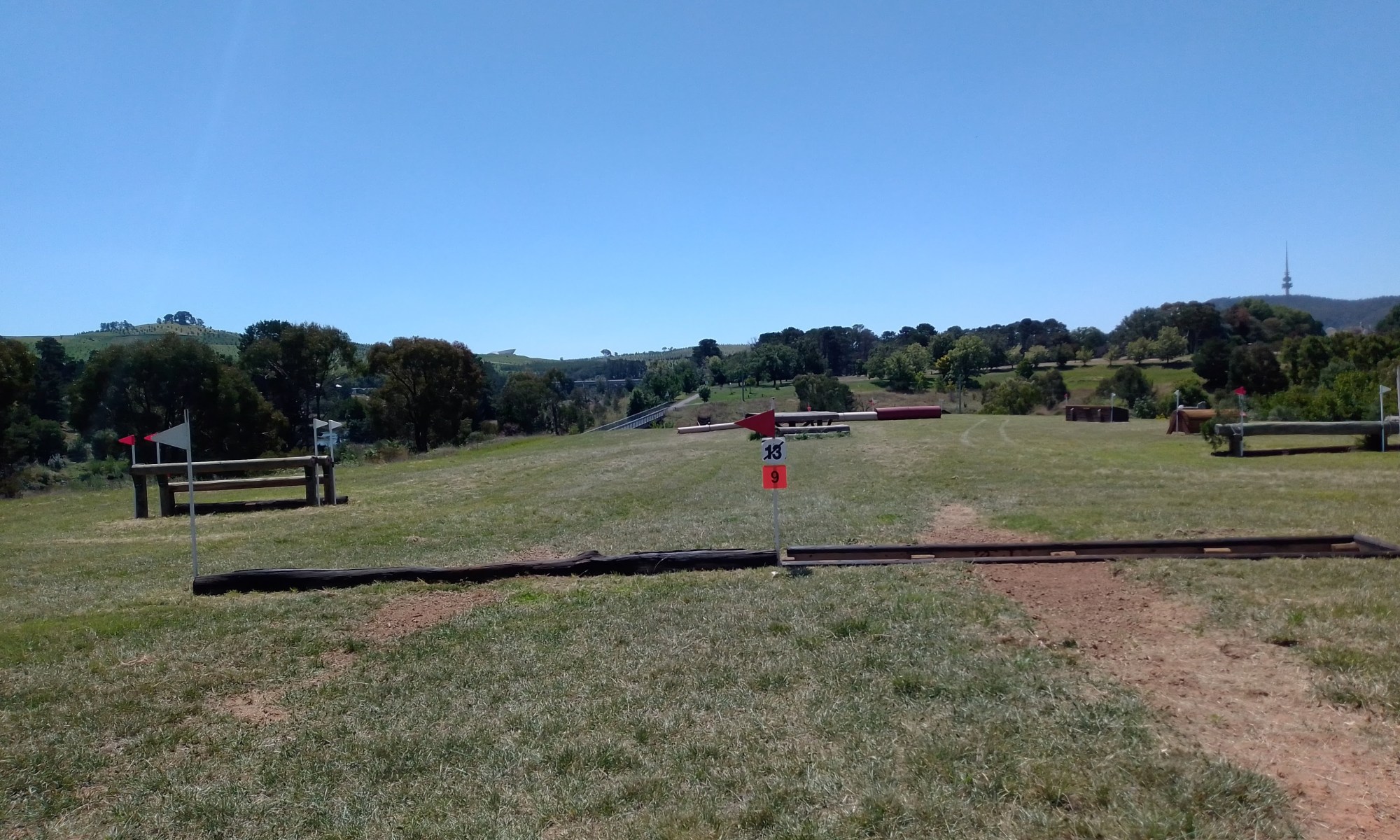
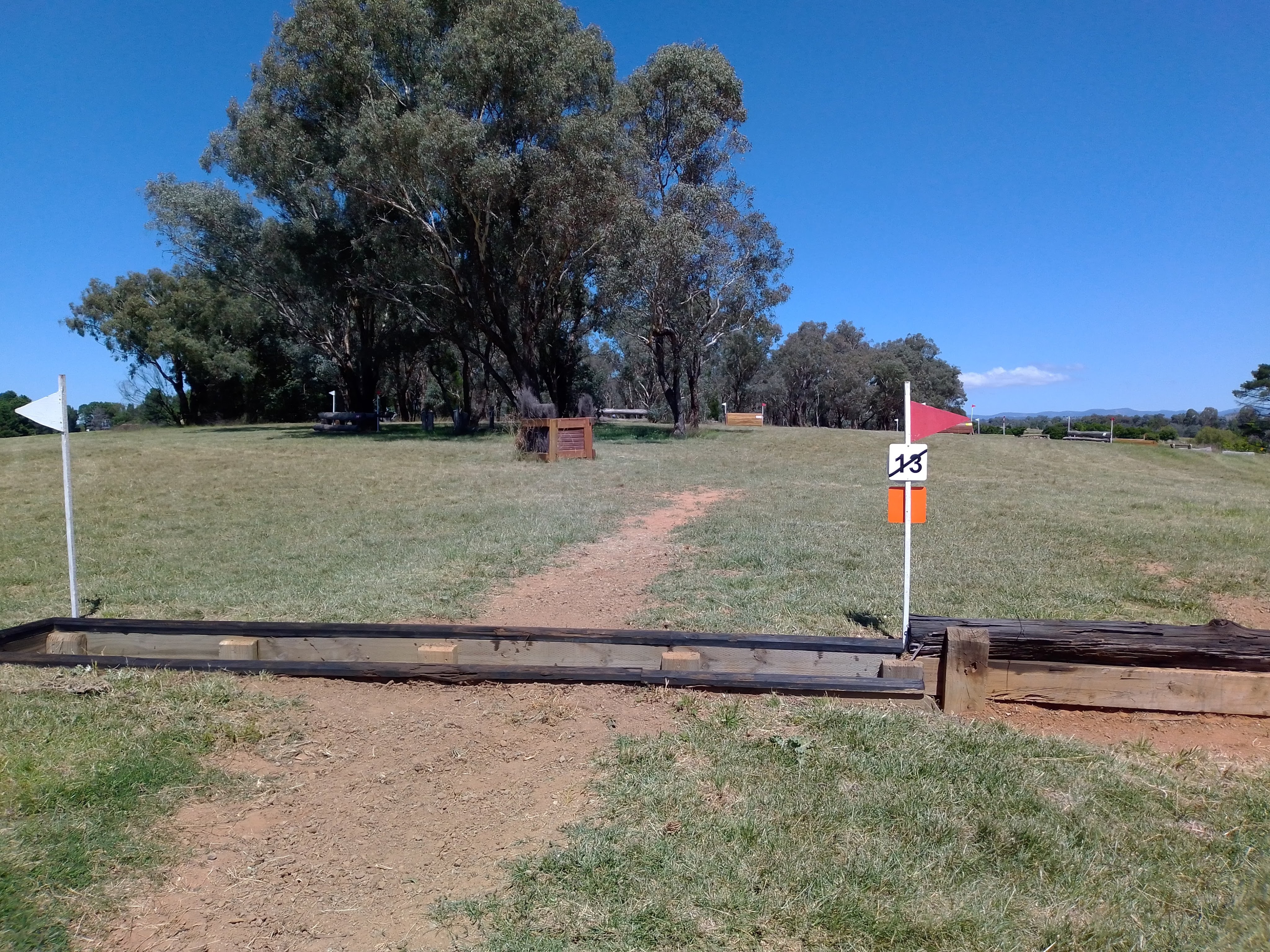
This is called a black flag…. odd really when the flags are still red and white – however, we’ve taken the liberty instead to place a black stripe over the number to indicate that there is an option on this jump. Not because it’s 13 and unlucky (there’s no such thing as luck according to Sam Watson from Equiratings – but I digress). This is because in the EvA80 course, this is an open ditch. Riders have the choice of the direct route (the quickest) or the option (slower). The option for this jump is a step down in the opposite direction. So it’s a safer option if you’re concerned about the ditch, but will take longer.
This is the black flagged option for the EvA80, which is shared with the EvA60.











 National Capital Horse Trials Association